
First Offense DUI in Tucson
Direct Attorney Review for Your DUI Charge & MVD Notice
A first DUI arrest can create two separate legal concerns: the criminal charge and an Arizona Motor Vehicle Division process that may affect your driving privileges even without a court conviction.
We defend clients in Tucson and throughout Pima County. Our review considers impairment observations, alcohol concentration, drug evidence, actual physical control, and how officers conducted the stop, arrest, and testing.
Call (520) 251-9561 to schedule a free consultation with attorney Carlos A. Medina.
How Arizona Classifies a First-Offense DUI
A standard conviction under A.R.S. 28-1381 is a Class 1 misdemeanor. Arizona law permits a DUI charge based on impairment to the slightest degree, an alcohol concentration of 0.08 or higher within two hours of driving or actual physical control, or certain drug-related evidence.
The phrase “first offense” describes prior-offense history, not necessarily the seriousness of the current allegation. Standard, extreme, super extreme, aggravated, and drug-related DUI charges carry different classifications and potential consequences. The applicable category depends on the alleged alcohol concentration, other test evidence, prior record, and circumstances of the arrest.
Potential Penalties for a Standard DUI Conviction
Statutory exposure isn’t a prediction of how an individual case will end. A conviction under A.R.S. 28-1381 may carry the following consequences:
- At least 10 consecutive days in jail, although a judge may suspend all but one day when the person completes qualifying court-ordered screening, education, treatment, or psychotherapy.
- A minimum $250 fine plus statutory assessments.
- Possible community restitution ordered by the court.
- A certified ignition interlock device when the offense involves intoxicating liquor.
- Completion of an approved traffic survival school program.
Program fees, license reinstatement expenses, insurance costs, vehicle charges, and monitoring costs may also apply. The precise exposure depends on the charged offense, alcohol or drug evidence, prior record, and other case facts.

Direct DUI Representation From Carlos A. Medina
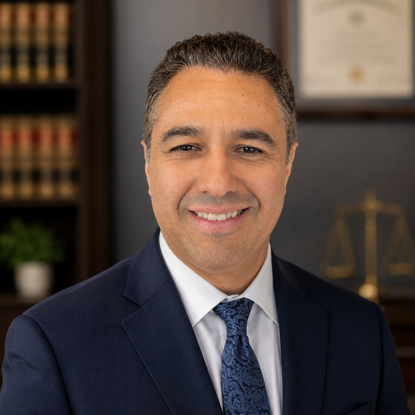
Founding attorney Carlos A. Medina works directly with our clients and develops the defense strategy for each case rather than routing it among associates. He has practiced Arizona criminal defense since 2009 and completed DUI-specific training through the University of Arizona Law, Criminal Justice and Security Program.
We provide representation in English and Spanish, allowing clients to discuss the evidence, court process, and license concerns in the language they prefer. Each defense plan reflects the specific charge and available evidence.

Get Your DUI Charge & MVD Notice Reviewed
Bring your citation, court paperwork, suspension notice, and testing documents to a free consultation. We can review the allegations, identify time-sensitive issues, and explain the available next steps without assuming a conviction is inevitable.
Consultations are available by phone, video, or in person. Carlos A. Medina handles DUI cases directly, so you can discuss both the criminal charge and your driving concerns with the attorney developing your defense.
Call (520) 251-9561 to request your free consultation with Law Office of Carlos A. Medina, PLLC.