
Multiple DUI Attorney in Tucson
Second DUI in Arizona Means Mandatory Minimums a Judge Can’t Touch
A second or multiple DUI charge in Tucson isn’t a more serious version of your first. It’s a different legal situation entirely, with statutory minimum sentences a judge can’t waive and an MVD process running on its own timeline. Knowing exactly what you’re facing is the first step toward building a defense that addresses it.
A second DUI charge puts your license, your freedom, and your finances at serious risk. Call (520) 251-9561 to schedule a free consultation with our Tucson DUI lawyer and get a clear picture of your options.
How Arizona Defines a Second or Multiple DUI Offense
Arizona uses an 84-month lookback period to determine whether a new DUI charge counts as a repeat offense. If you have a prior conviction under the standard DUI statute (A.R.S. 28-1381), the extreme DUI statute (A.R.S. 28-1382), or the aggravated DUI statute within the preceding 84 months, the current charge triggers sentencing enhancements. The BAC level of the earlier conviction doesn’t matter. What matters is whether it falls within that window.
A third conviction within the same 84-month period moves the charge to a different category altogether. At that point, it’s automatically prosecuted as felony aggravated DUI, which carries consequences beyond anything a misdemeanor court can impose.
Mandatory Minimum Sentences for a 2nd DUI in Arizona
These are the statutory floors set by Arizona law. A judge can’t sentence below them.
Second Standard DUI (BAC under 0.15%)
At least 90 days in jail, with a minimum of 30 days served consecutively. A judge may suspend the remaining 60 days if the defendant completes court-ordered alcohol or drug screening, education, or treatment. Fines start at $500 plus two mandatory $1,250 assessments, at least 30 hours of community restitution, a one-year license revocation, and a minimum 12-month ignition interlock device requirement after reinstatement.
Second Extreme DUI (BAC 0.15% to 0.199%)
At least 120 days in jail, with 60 days served consecutively. Fines and the ignition interlock requirement apply at the same levels as a second standard DUI.
Second Super Extreme DUI (BAC 0.20% or higher)
At least 180 days in jail, with 90 days served consecutively. These are the highest mandatory minimums available for a misdemeanor DUI in Arizona.
None of these sentences are eligible for probation or a suspended sentence until the mandatory minimum jail time has been completed. Because a judge has no discretion to reduce these floors, the defense shifts to whether the state can actually prove its case.
Our Defense Approach for Multiple DUI Charges
We build a defense strategy around the specific facts of each client’s arrest rather than applying a standard template. Whether the issue is the legality of the stop, the administration of field sobriety tests, or the accuracy of chemical testing, the analysis starts from your circumstances.
We represent clients in English and Spanish, which means Tucson’s Spanish-speaking community can work directly with us without relying on interpretation at critical moments in a case.

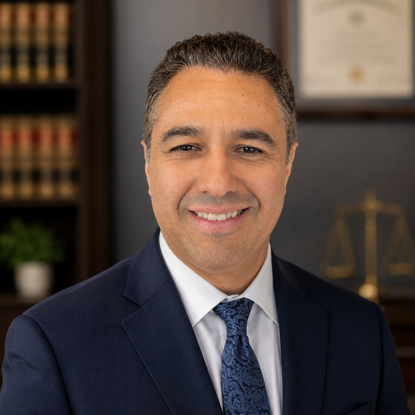
Carlos A. Medina: Direct Representation on Every Case
Carlos A. Medina has been a licensed Arizona criminal defense attorney since 2009, with more than 15 years handling misdemeanor and felony cases in Tucson, including DUI charges at every level. He completed a DUI seminar through the Law, Criminal Justice and Security Program at the University of Arizona Law, giving him formal training in the specific legal and evidentiary issues these cases raise.
Medina is a member of the American Bar Association and the National Association of Criminal Defense Lawyers. He represents clients in Tucson City Court, Pima County Consolidated Justice Court, Pima County Superior Court, and the U.S. District Court in Tucson. When a second DUI escalates to a felony aggravated DUI and heads to Pima County Superior Court, Medina handles it directly, not through associates or paralegals.
Cases at Law Office of Carlos A. Medina, PLLC are worked by Medina personally from the initial consultation through resolution. When you call our office, you’re working with your attorney.

Which Tucson-Area Court Handles Your Case
Where your case is heard depends on how the charge is filed. Misdemeanor second DUI cases are typically prosecuted in Tucson City Court or Pima County Consolidated Justice Court. If the charge is elevated to felony aggravated DUI, which happens automatically on a third conviction within 84 months, it goes directly to Pima County Superior Court regardless of where in Pima County the arrest occurred.
If the arrest happened in Oro Valley, the starting court is different. Misdemeanor DUI charges from Oro Valley are generally handled in the Oro Valley Magistrate Court rather than a Tucson city or county court. A felony charge from Oro Valley, like any felony DUI in Pima County, bypasses the local magistrate court and goes to Pima County Superior Court.
Start Your Defense Before the Deadlines Pass
The 15-day MVD filing deadline runs from the date of arrest, not the date charges are filed. Waiting costs options that can’t be recovered later. A free consultation with our multiple DUI lawyer in Tucson costs nothing and can give you a direct assessment of what your case involves.
We offer consultations in person, by phone, or by video. Financing is available through Affirm, and we offer flexible payment plans to make quality defense accessible. Our fees are reasonable and transparent.
Contact Law Office of Carlos A. Medina, PLLC today at (520) 251-9561 to schedule your free consultation and protect your right to fight this charge.